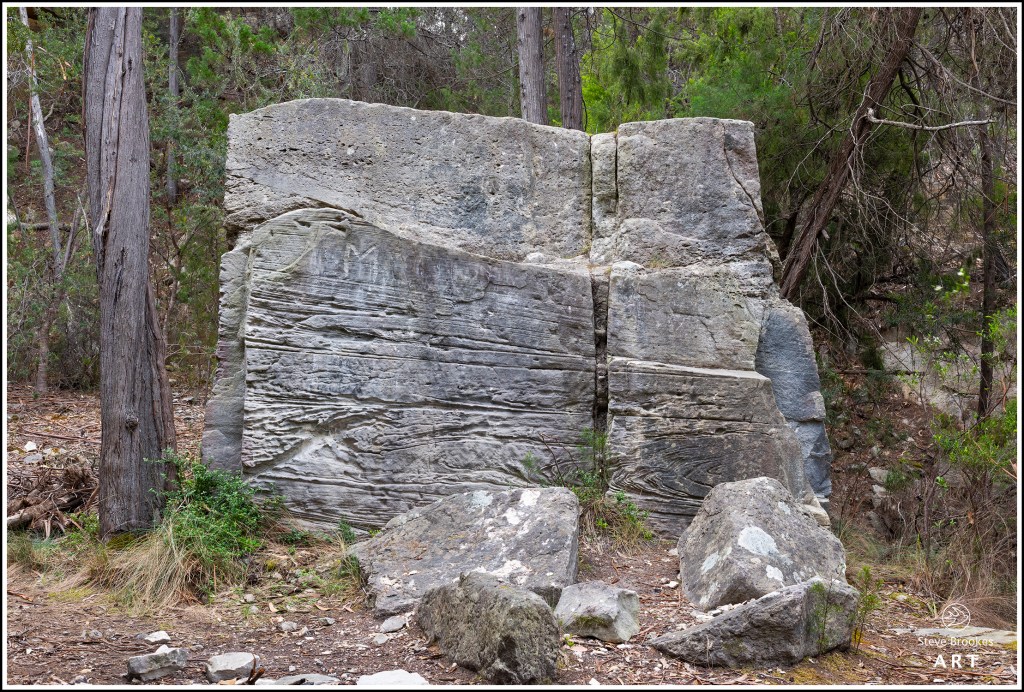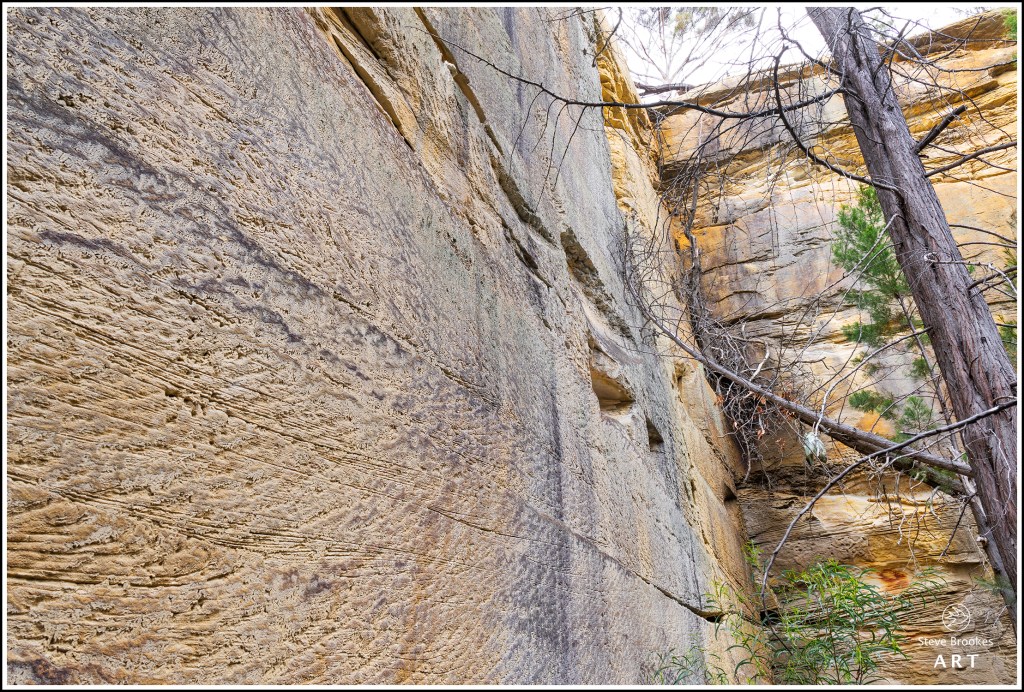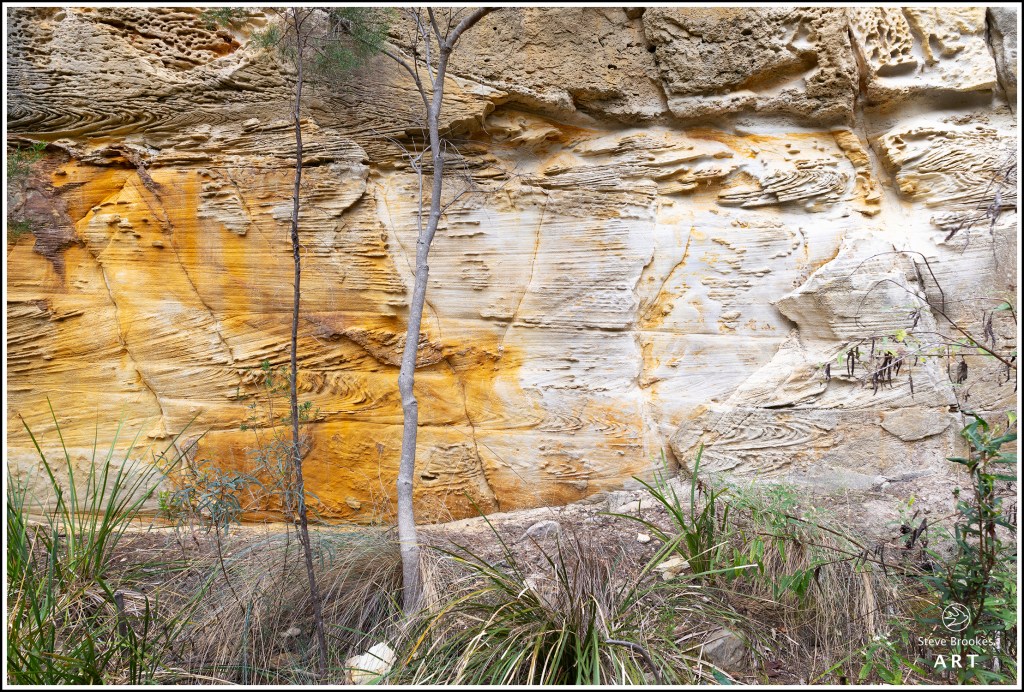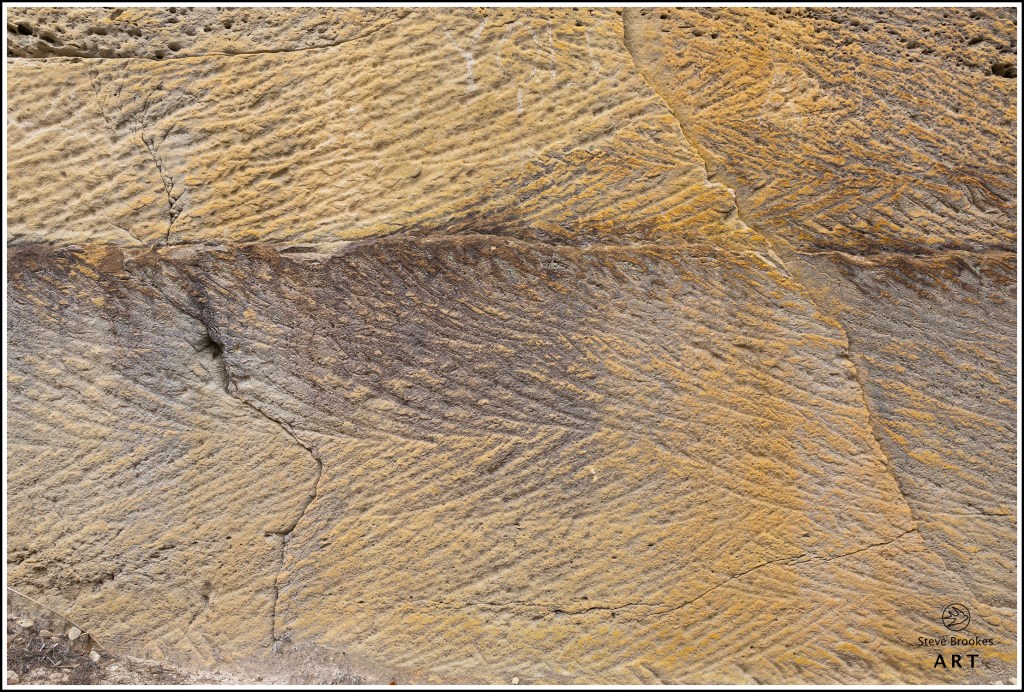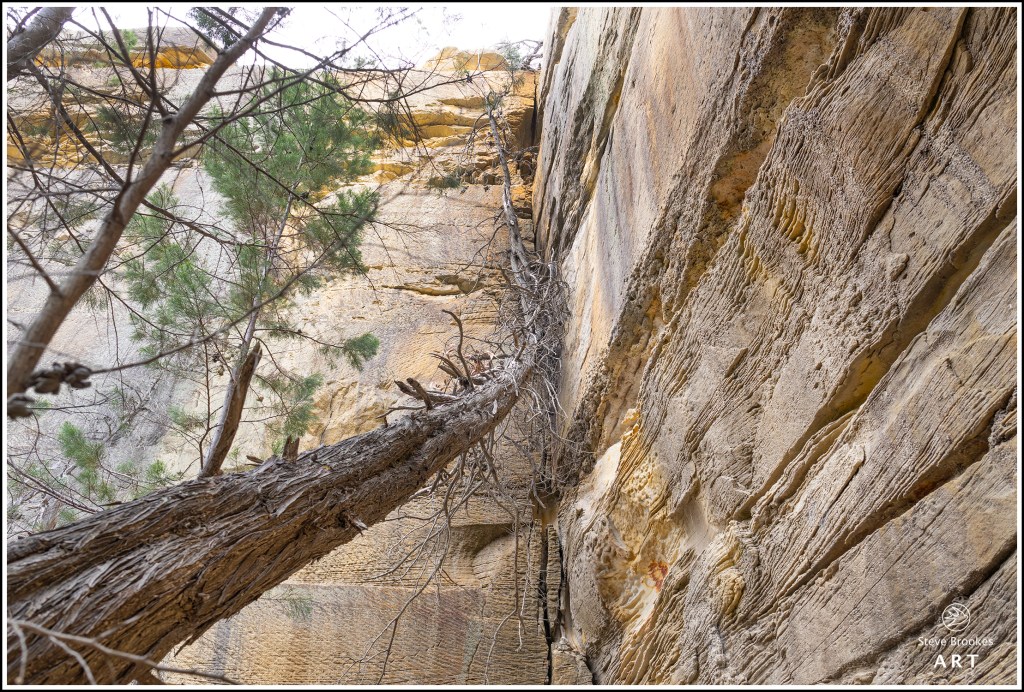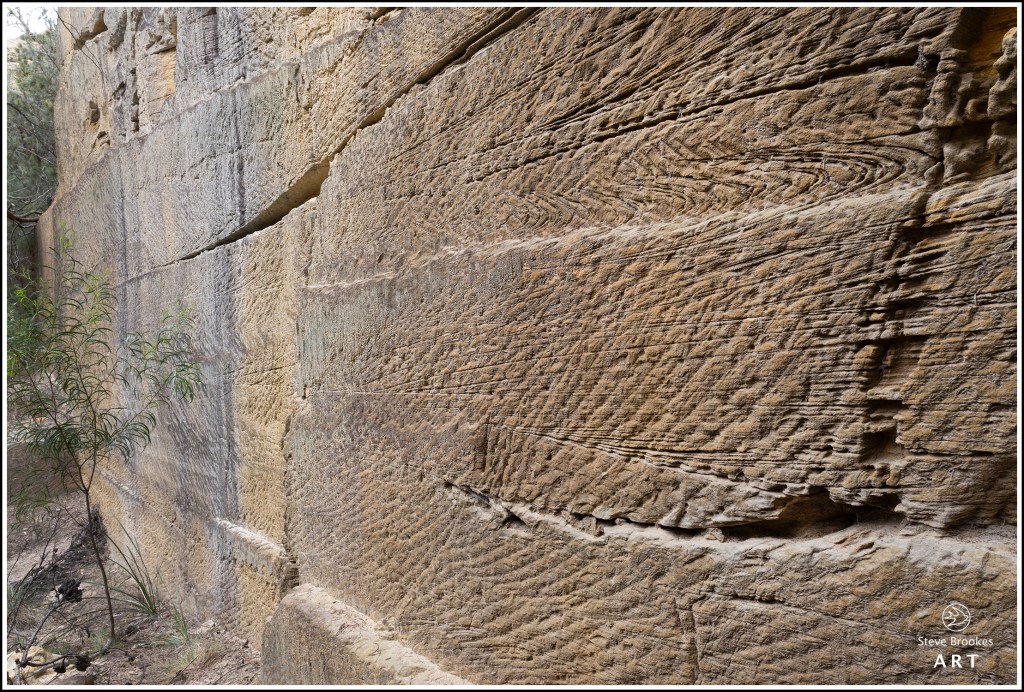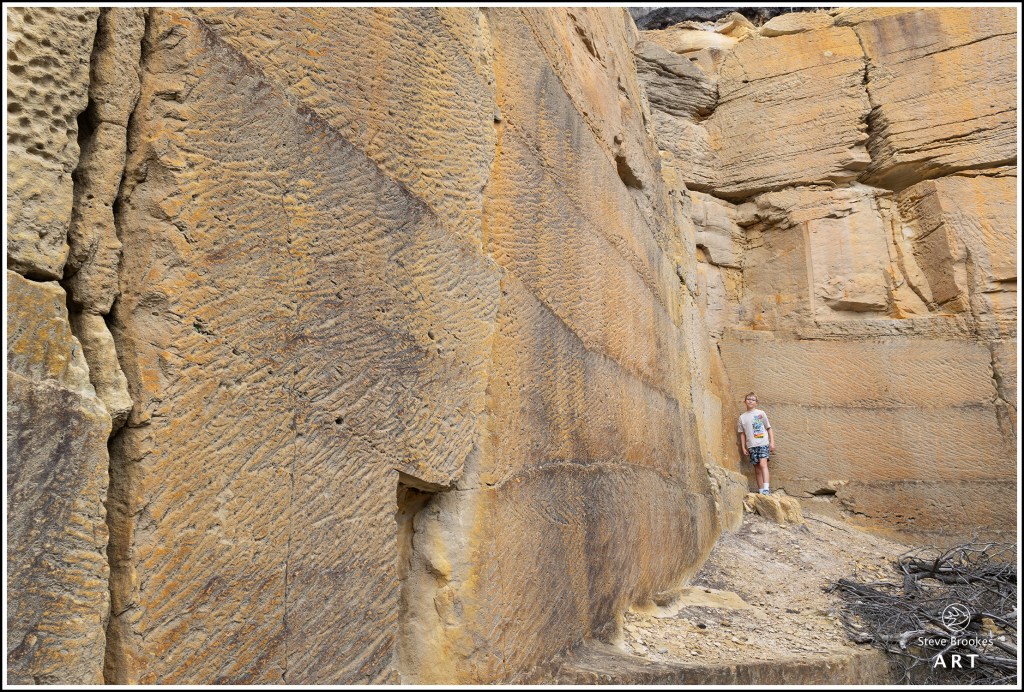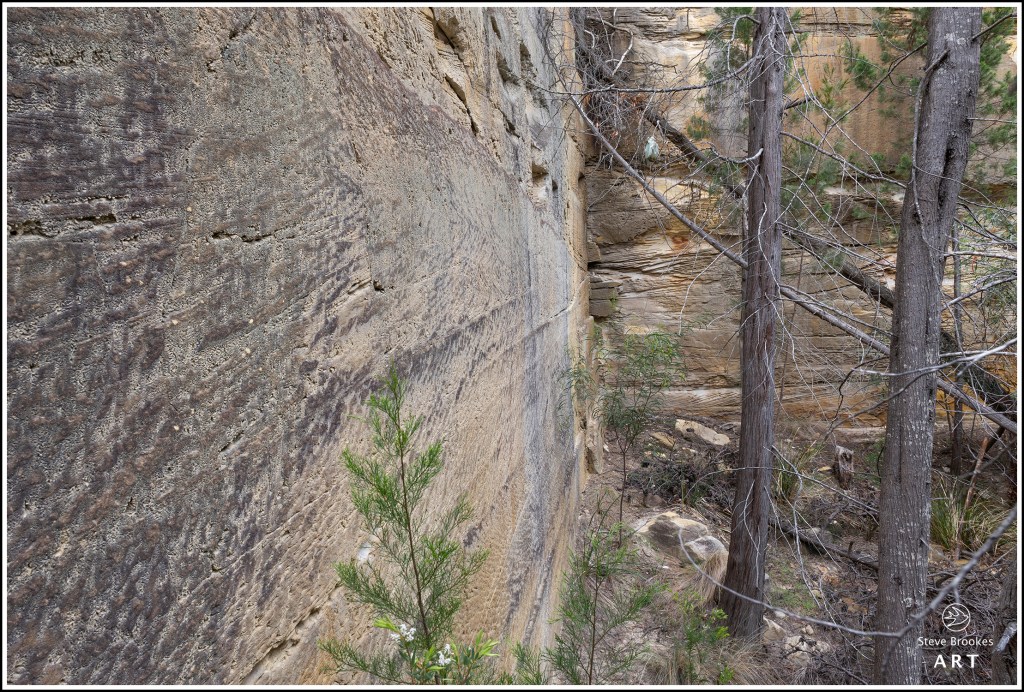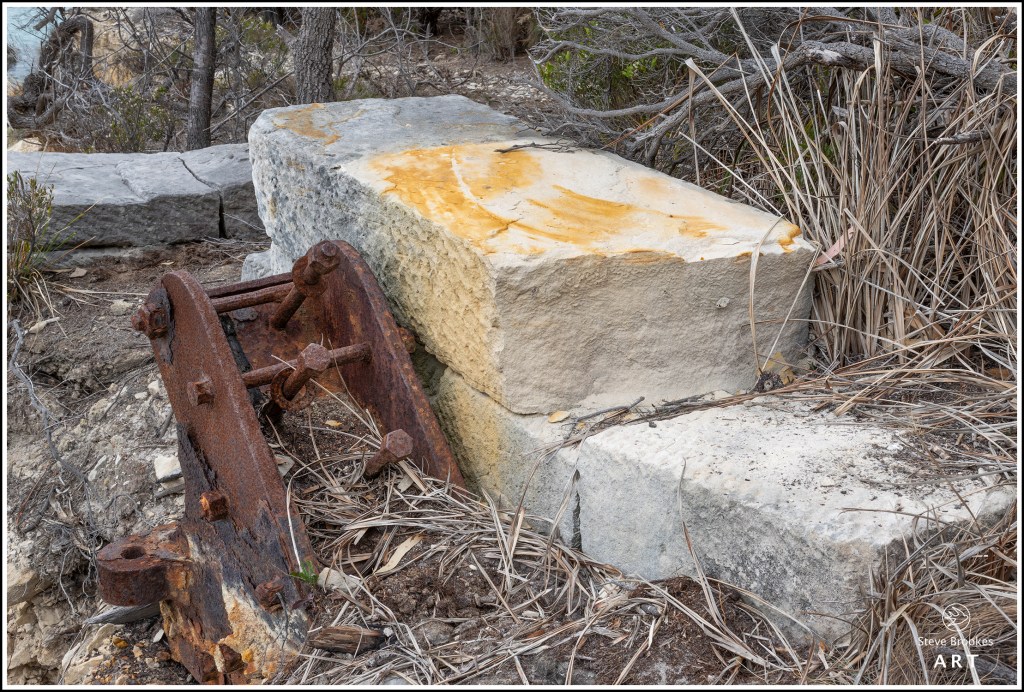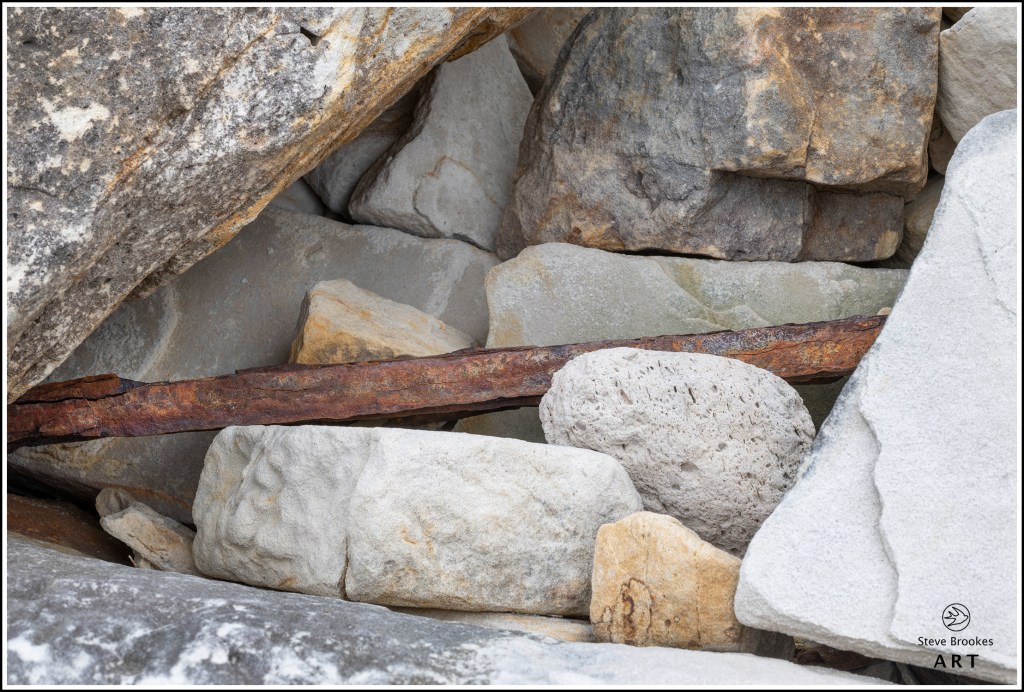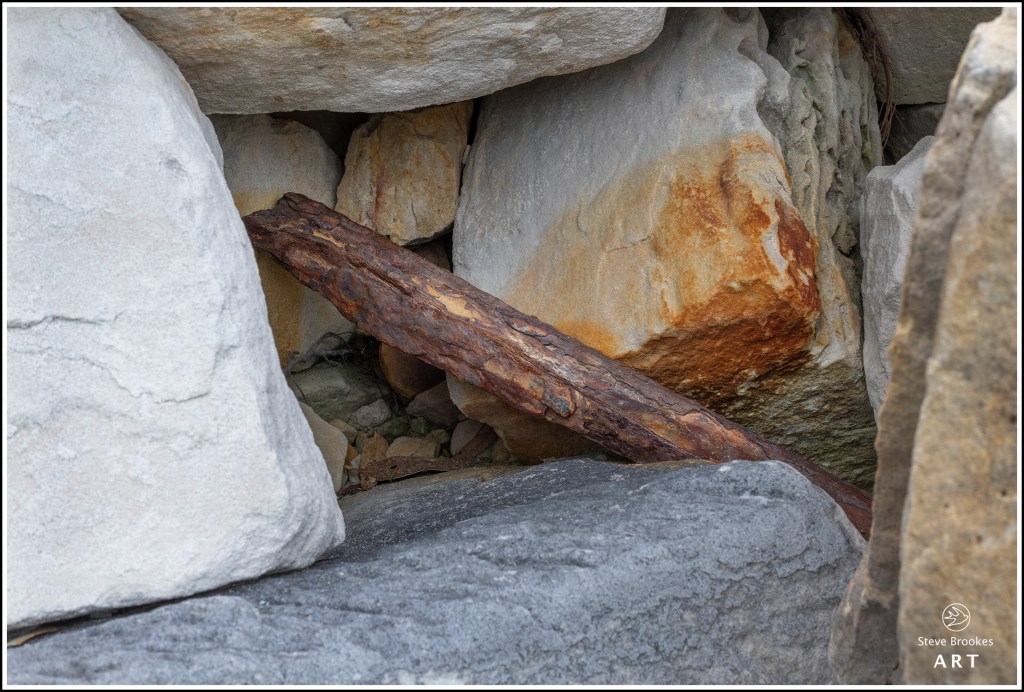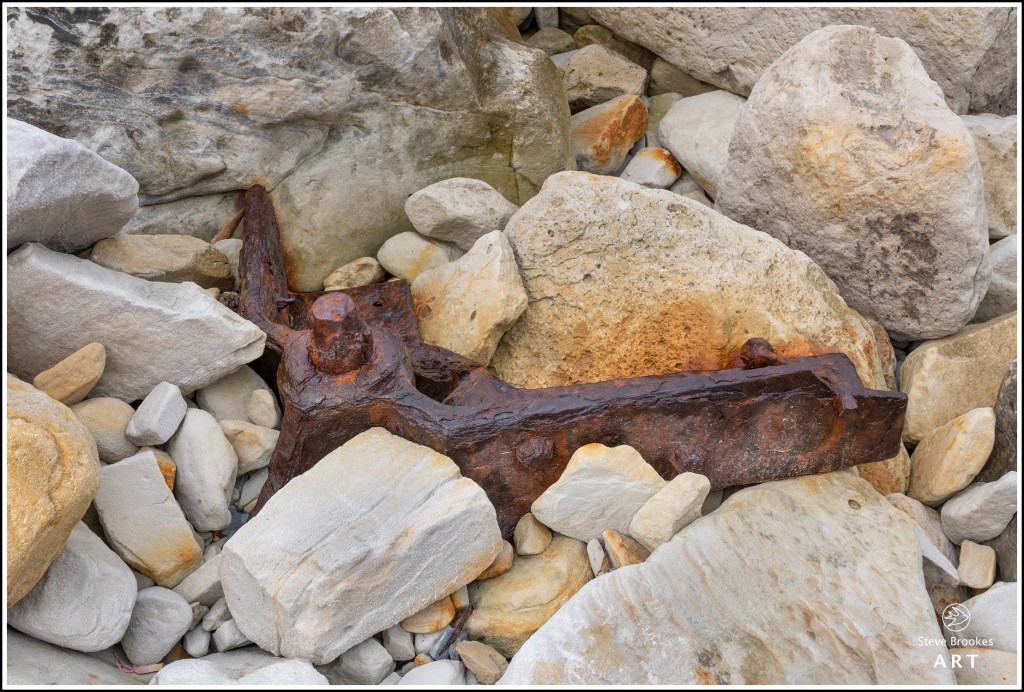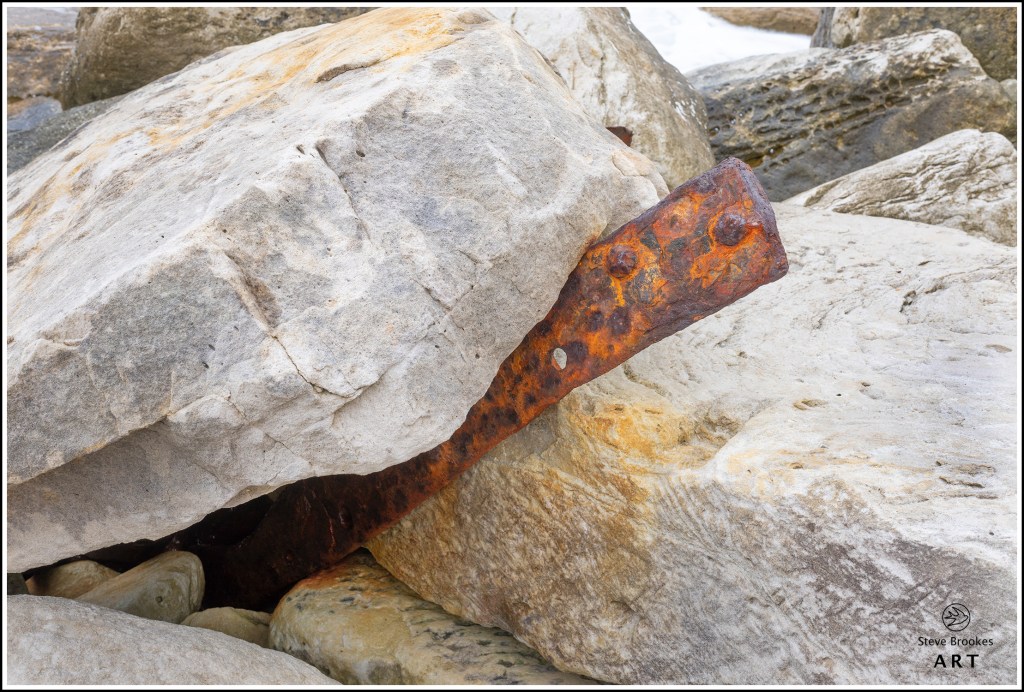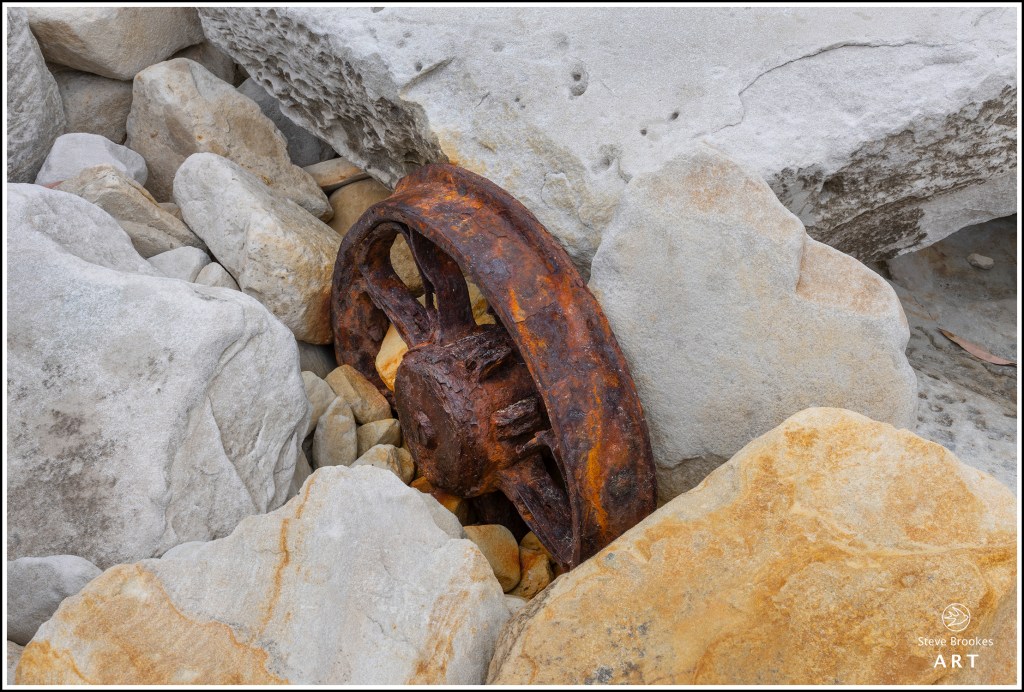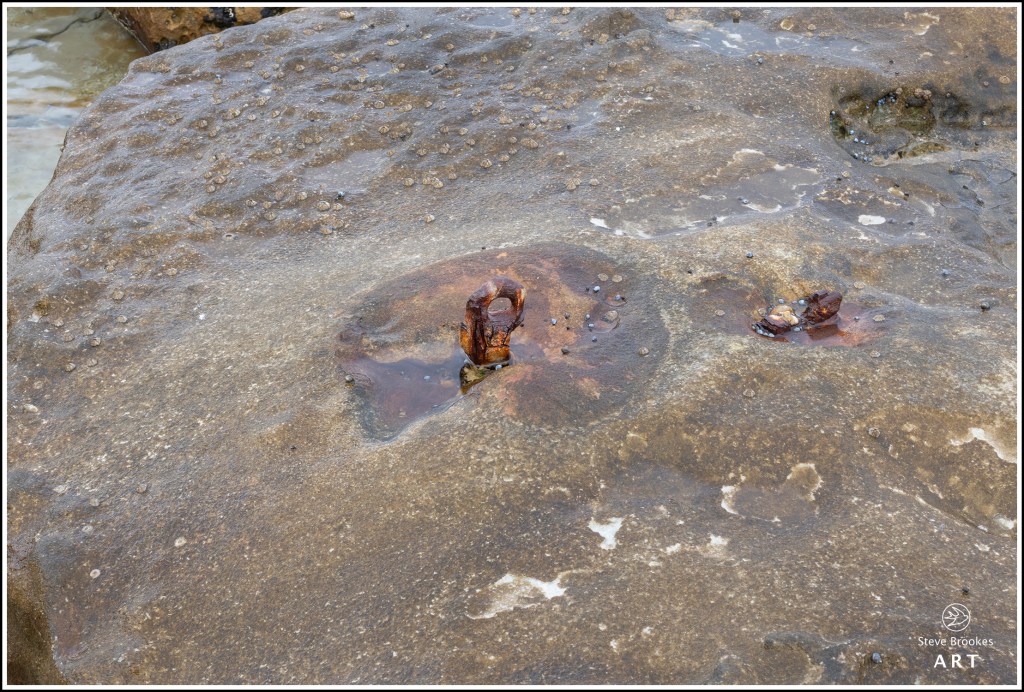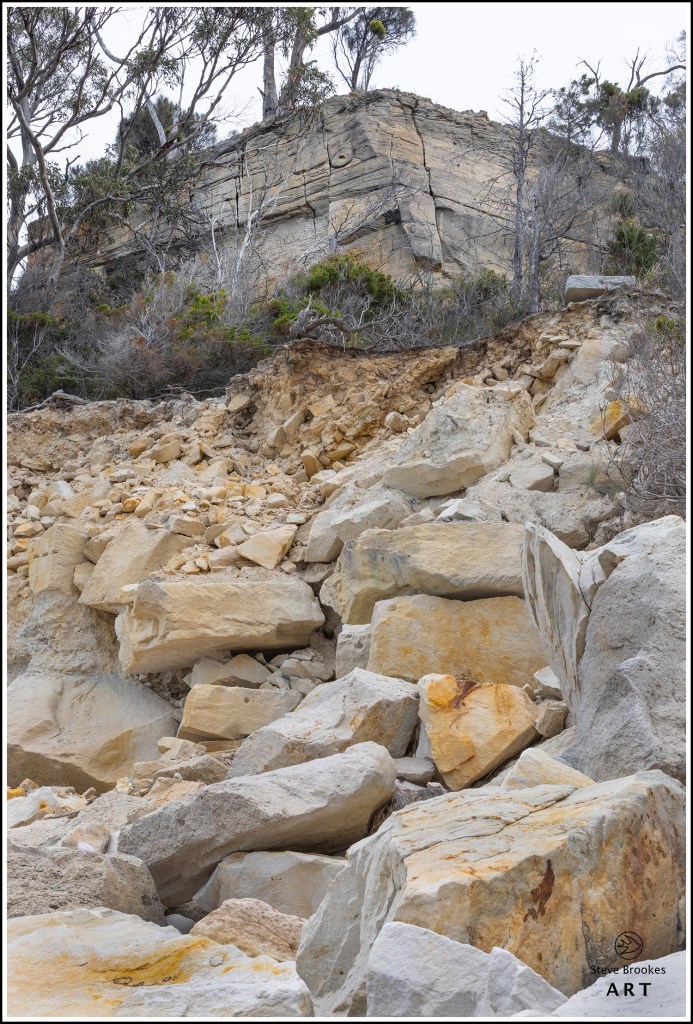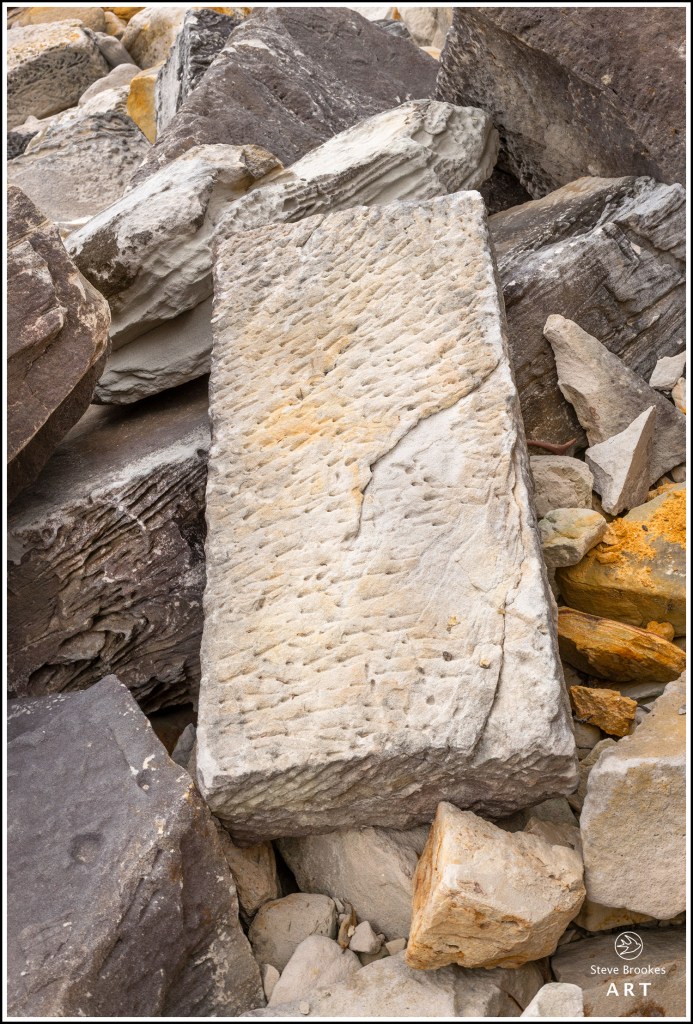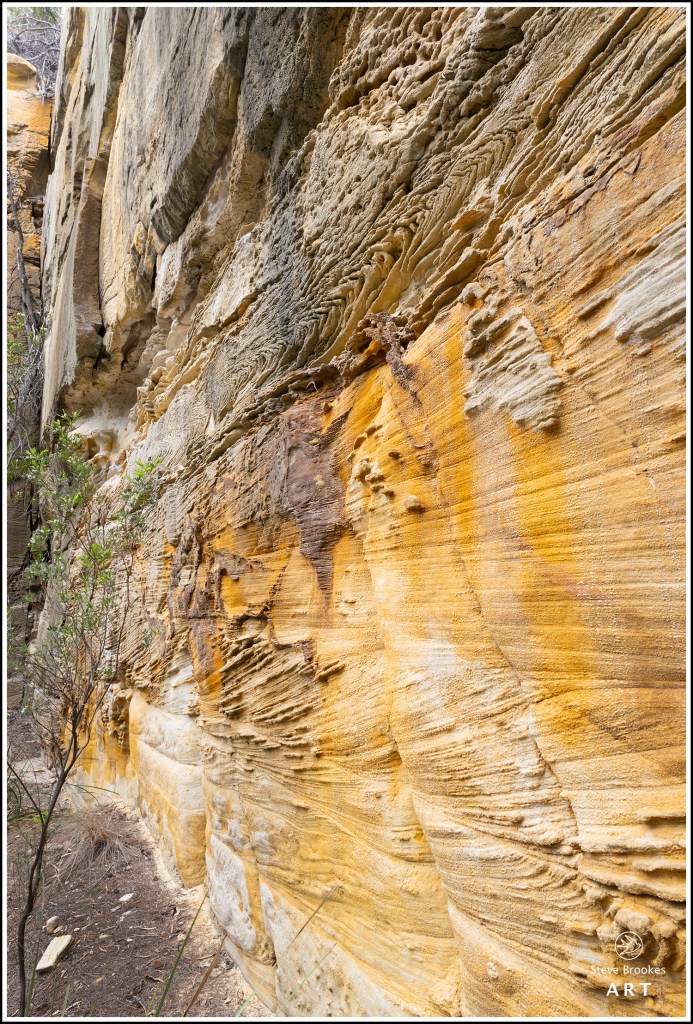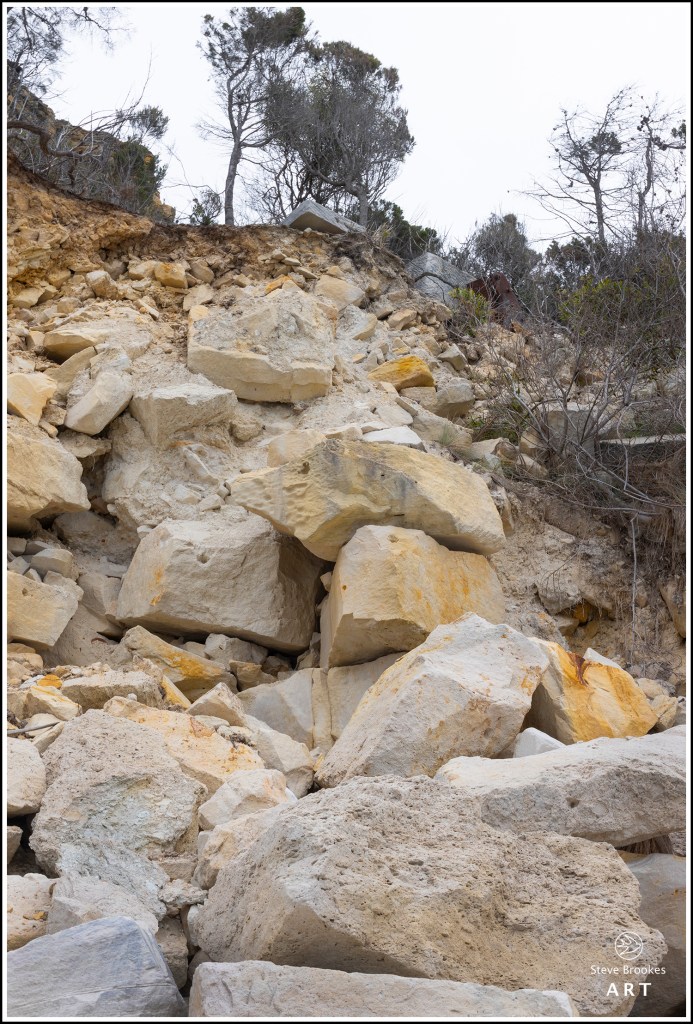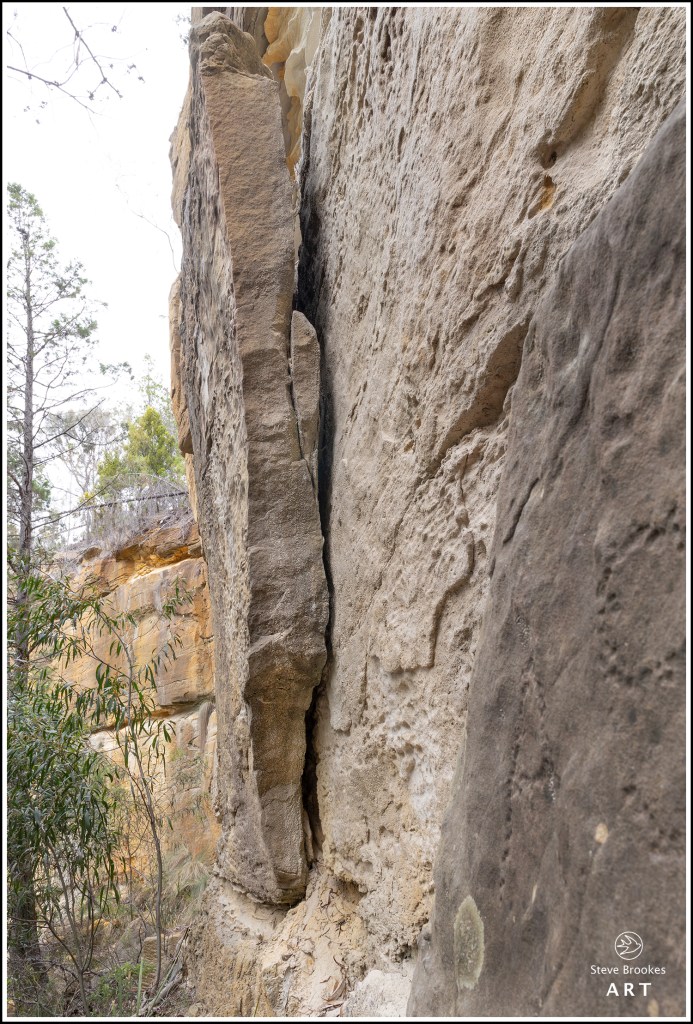
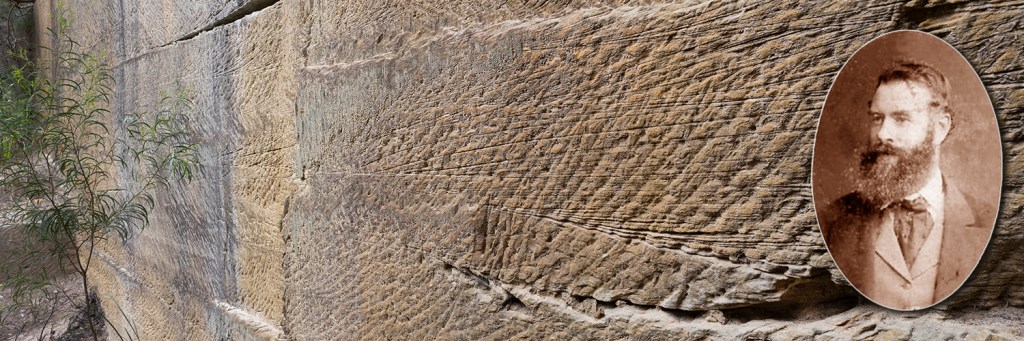

The Quarries, as we called them, are a special place. There is only the one, main quarry at Quarry Point, which is located between Shelly Beach and Spring Beach near Orford on Tasmania’s east coast. I have no idea why we called it The Quarries, just one of those kid things, I guess. It’s special for a number of reasons but mainly because it was a favourite spot for my brothers and I to go exploring and diving.
It was where I came, literally, face to face with a very large, black conger eel. I was diving down to check under a rock ledge for crayfish, but found an upset and slightly angry eel instead. It was also where we discovered that it’s not a good idea to start a fire on wet rocks. I blame my older brother, Pete. Pretty sure it was his idea to light a fire to warm up after a dive, we managed to escape serious shrapnel wounds (just).
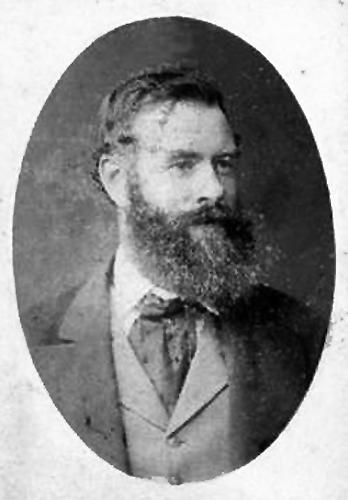
Only recently did I decide to look into the history of this particular quarry and the more I delved into its relatively short life the more fascinating it became. This is a short story about this quarry but, more importantly, about the impact of one man.
History tends to highlight the deeds of ‘great’ men. I use the work “great” here with a huge helping of sarcasm. Almost nothing is written about the men and women who actually did the hard work to build the Tasmania we have today. So, this is the story of one of those men, Stephen Crabtree. The more I researched the Orford Quarry the more the name Stephen Crabtree popped up. So, like I always seem to do, I started looking at his life and the lives of his family.
Born in 1838 his working life started at the tender age of 13, an 1851 Briercliffe (England) Census lists him as a “Quarry Boy”, his father at this time was a blacksmith and even his younger brother, Lawrence, was gainfully employed as an “Errand Boy”. Even from an early age it’s clear that he and his family had a strong ‘work culture’, this would continue for the rest of his life.
From England he travelled to Australia at the height of the gold rush, around 1858, and settled in Ballarat (Victoria). He wasn’t there all that long before he decided that gold rushing wasn’t really his thing (good choice).
The next best option was Tasmania (another good choice) and he arrived in Hobart on the 14th of September 1860 from Melbourne on the steamer City of Hobart, he travelled steerage (not so great).
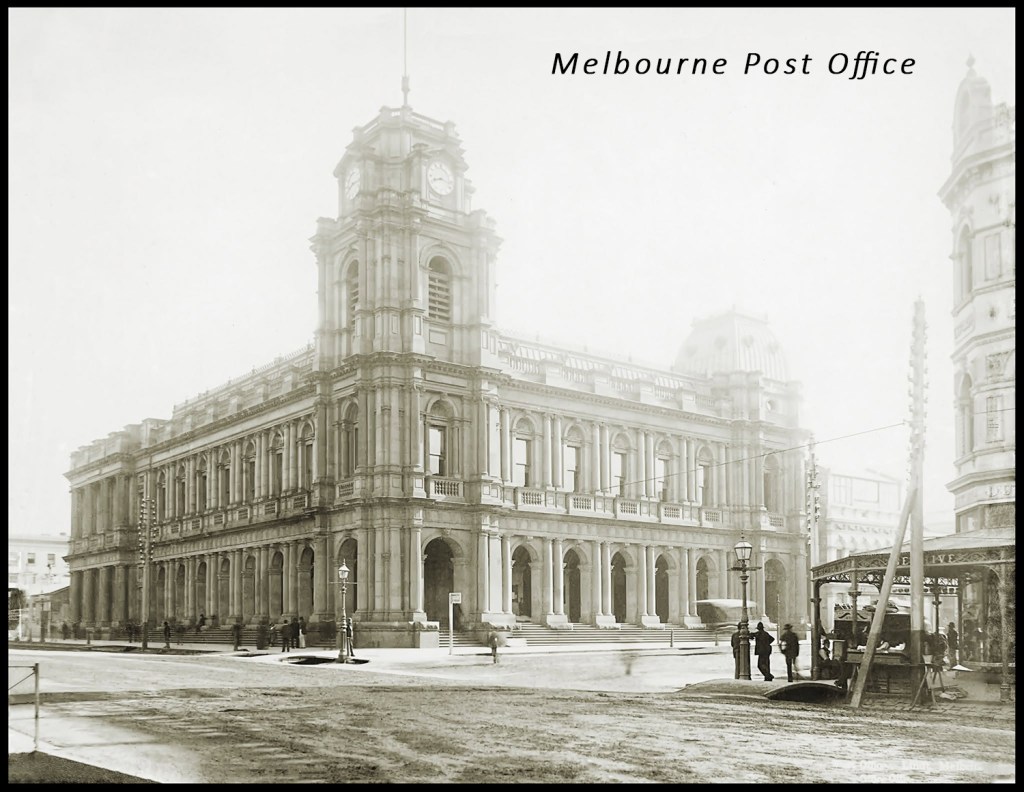
Around this time a quarry at Spring Bay was started (near Oakhampton Bay and Triabunna) with the promise of an “unlimited” supply of the finest sandstone the world has ever seen. A report filed by a fellow called Mr Todd (apparently an inspector for the construction of the Melbourne Post Office) says, “It will be observed that the analysis of the stone proves it to be superior to the Craigleith sandstone, the best in the United Kingdom.” So, it must have been OK.
Unlimited infers infinite, to quote Albert Einstein, “Two things are infinite: the universe and human stupidity; and I’m not sure about the universe”. So, what happened at Oakhampton – it ran out of sandstone.
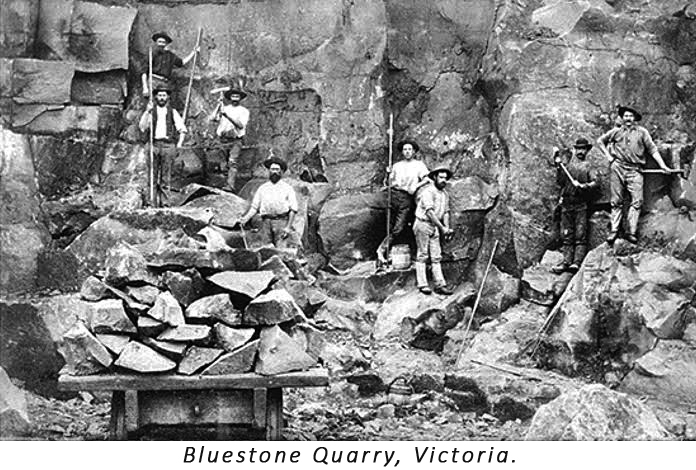
A company from Melbourne, Glaister and Co, arrived to suss out the potential of the Spring Bay sandstone for use in their contract to supply stone to the newly designed Melbourne Post Office. The problem for them was the supply of sandstone, they quarried bluestone in Victoria and that was to make up the bulk of the structure. The sandstone was to be used in the façade as it’s heaps easier to work than bluestone but, at that time, there was no decent sandstone discovered in Victoria.
Thomas Glaister and his mate Thomas Gamon (Thomas was a popular name back then) decided to buy the land where the Orford Quarry now sits. It’s hard to know exactly when they started quarrying stone from the Orford site but it would have been around 1865. Newspaper reports at the time indicate that stone was being shipped from both Oakhampton and Orford with a lot of it being sent to Melbourne and some to Hobart.
Despite the assurances of a whole bunch of important men regarding the “unlimited” supply at Oakhampton, it became clear that not only was the supply limited but there were issues with the stone. There is a saying that goes something like “cometh the moment, cometh the man”, enter Stephen Crabtree.
There is no clear record of when he started work at Oakhampton but he was well established as foreman there by 1868. We do know that he was living in the Spring Bay area in 1865 because he married an ‘interesting’ lady called Dorothy Softly at the wonderful Buckland church in that year and on the wedding register his occupation is listed as “Quarryman”.
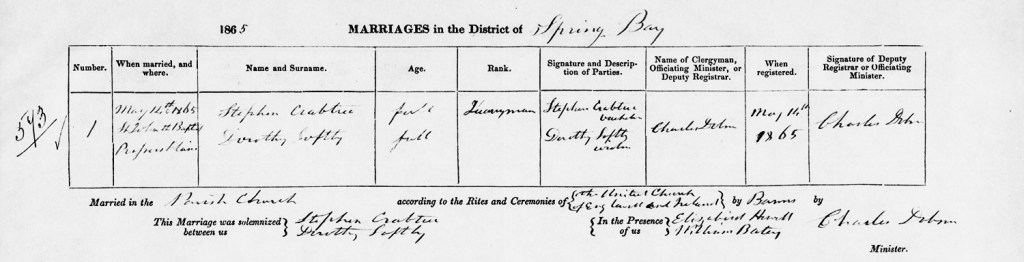
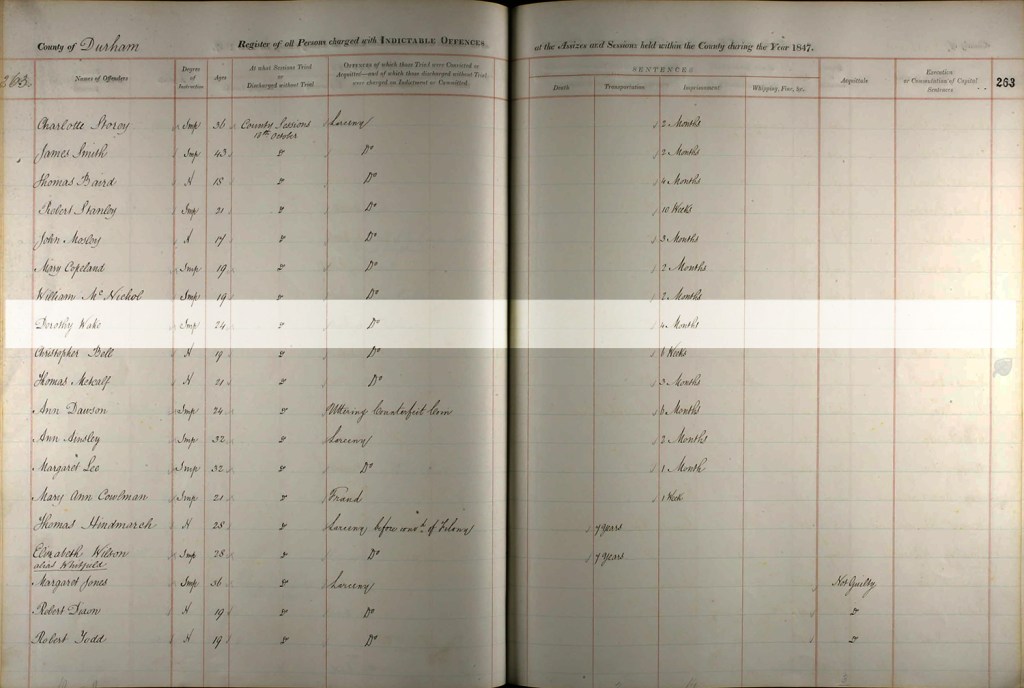
At this point it is worth looking at the life of his new wife. Dorothy was born in 1822 in England and was married to a fellow named Matthew Wake around 1840 and within eight years was in prison for stealing. I can find no indication she had any children with Mr Wake but within another twelve months of her first offence she was in court again, this time her sentence was transportation to Tasmania for a minimum of 10 years.
Being a convict in Tasmania in the 1850s would not have been much fun but, judging by her convict record, she didn’t really make things easy on herself. Lots of misdemeanour offences, drunkenness and prostitution, all of which resulted in “hard labour”. So, she is still married to Matthew Wake but then gets permission to marry someone called John Allen in 1853. Now, I can’t find a record of that marriage, just her permission to marry. There is, however, a record of her marriage in 1856 to someone else, a George Newbold – but she lists herself as a widow although Matthew Wake is still very much alive. Just a few of the documents I unearthed (below), click on the thumbnails to view in detail:
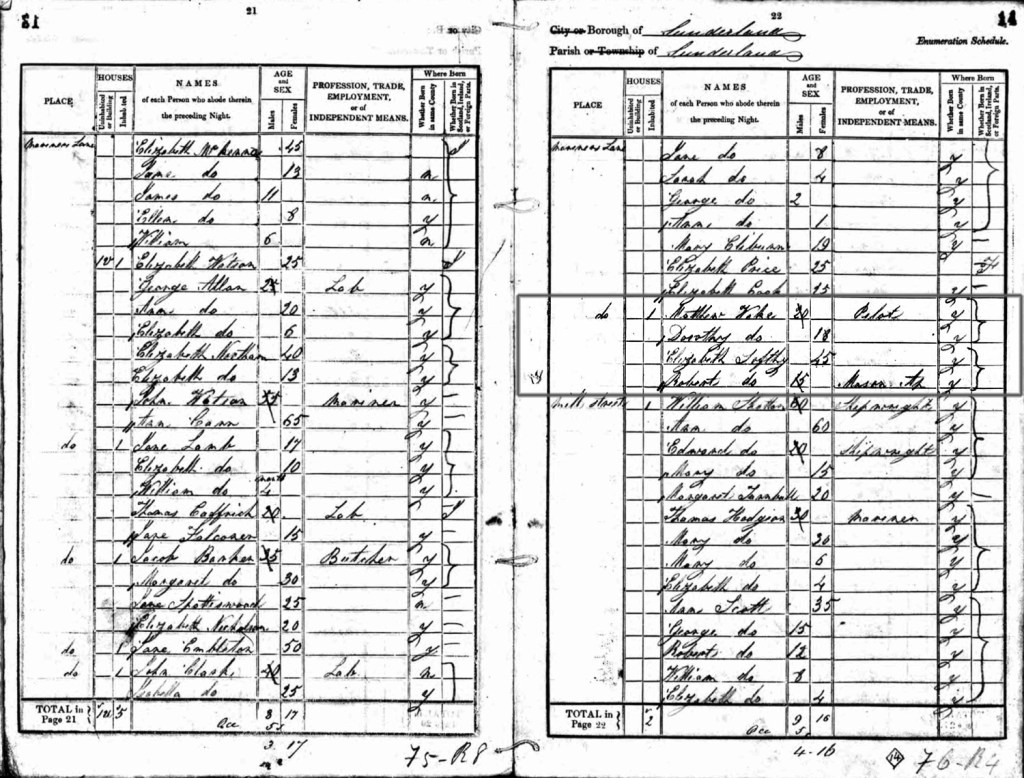
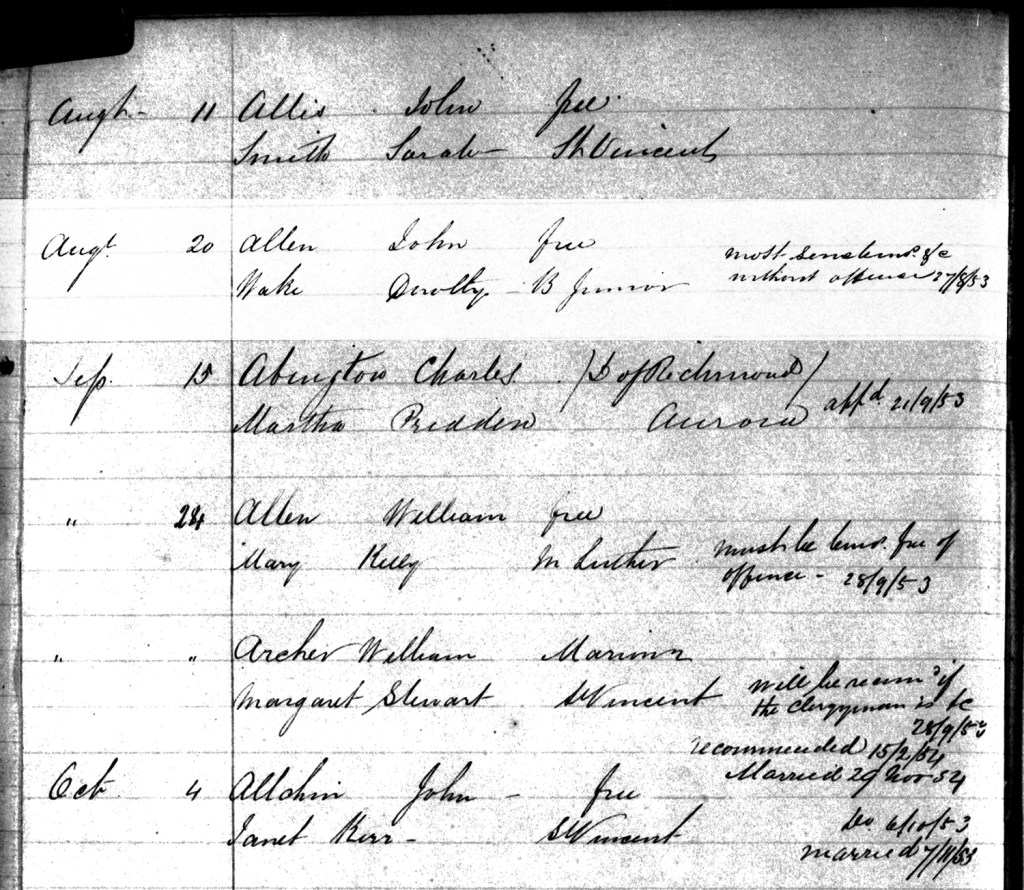
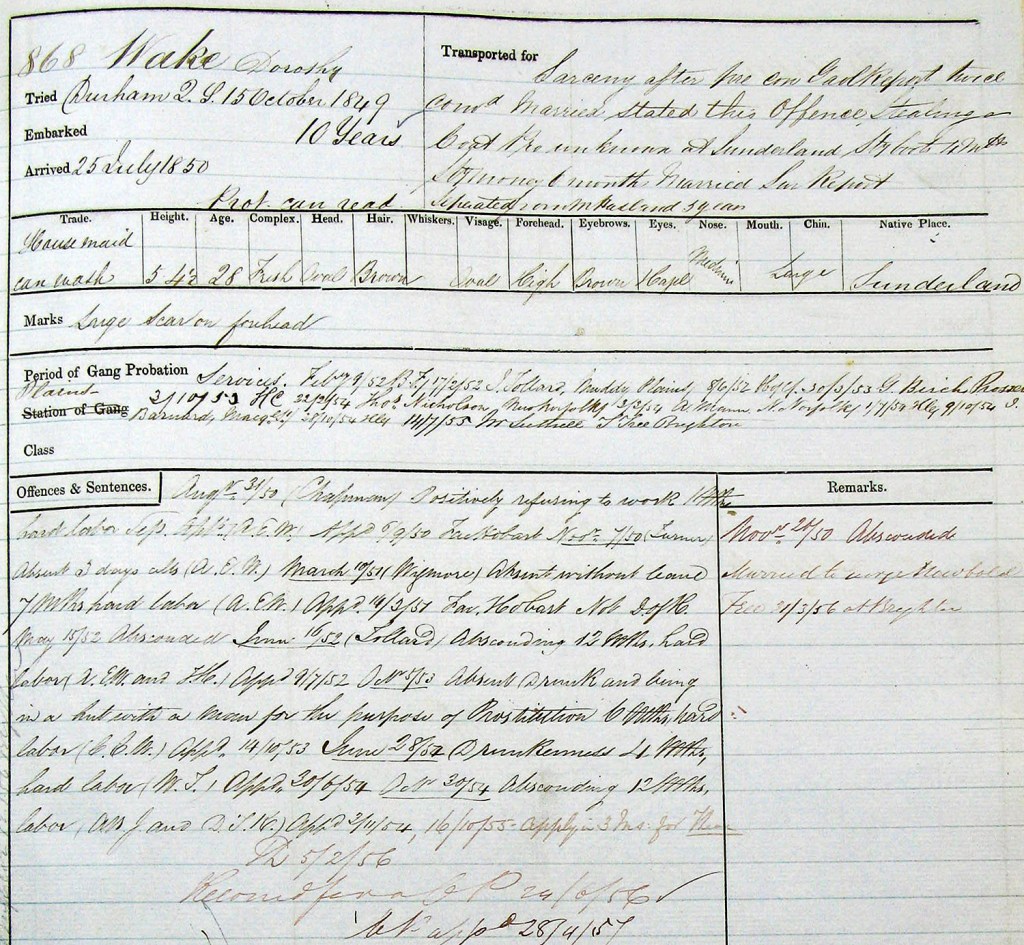
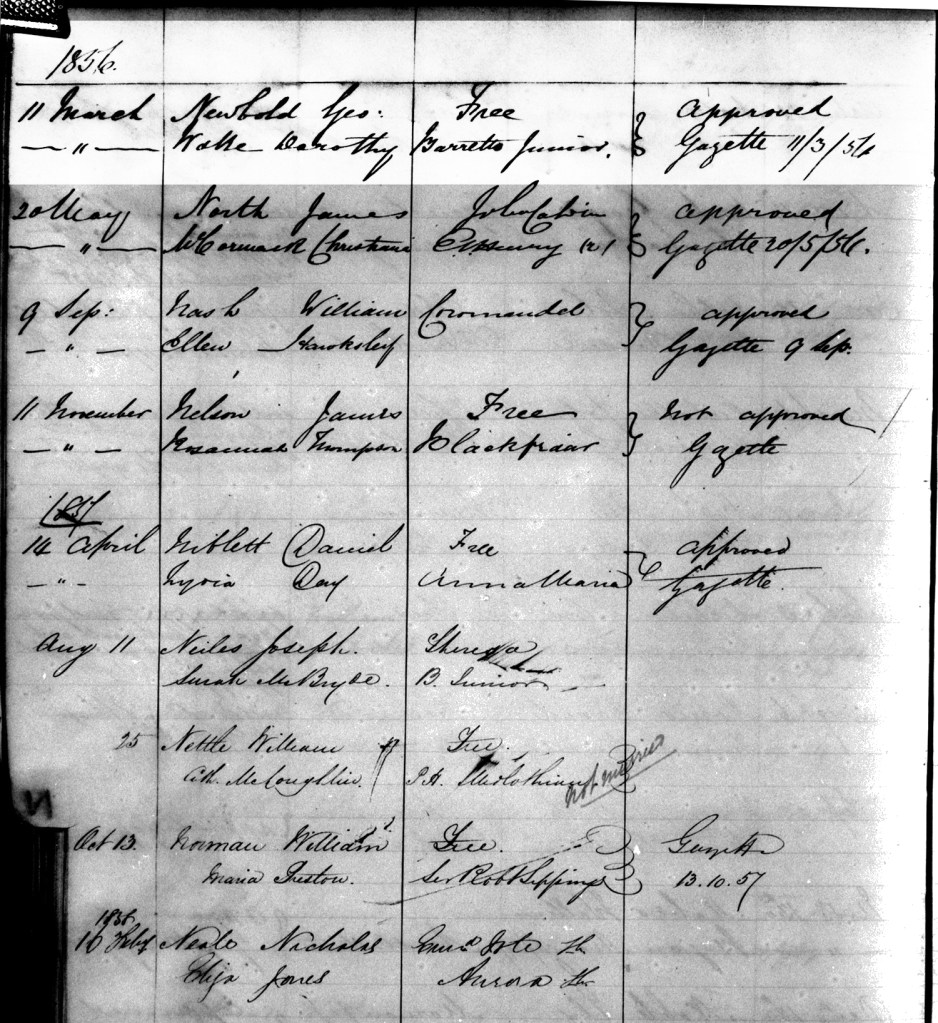
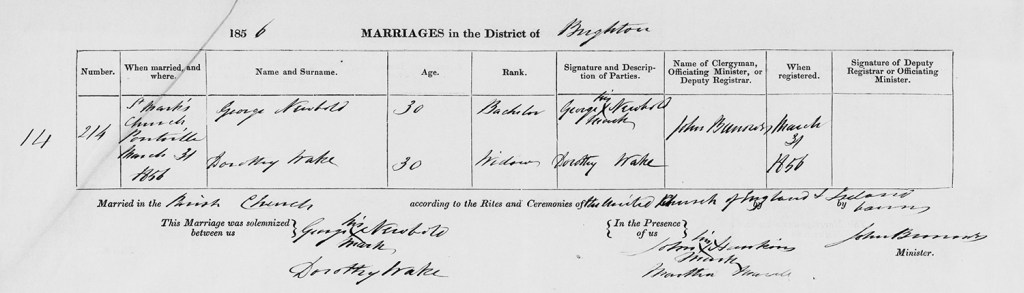
Just to make her life even more interesting she ends up marrying our Stephen Crabtree even though she is still technically married to Matthew Wake and George Newbold. On the marriage register she lists herself as a widow (again) but uses her original surname of Softly, Matthew and George (and possibly poor John Allen) are all still alive at this point – not sure how she managed all that but it must have been very confusing.
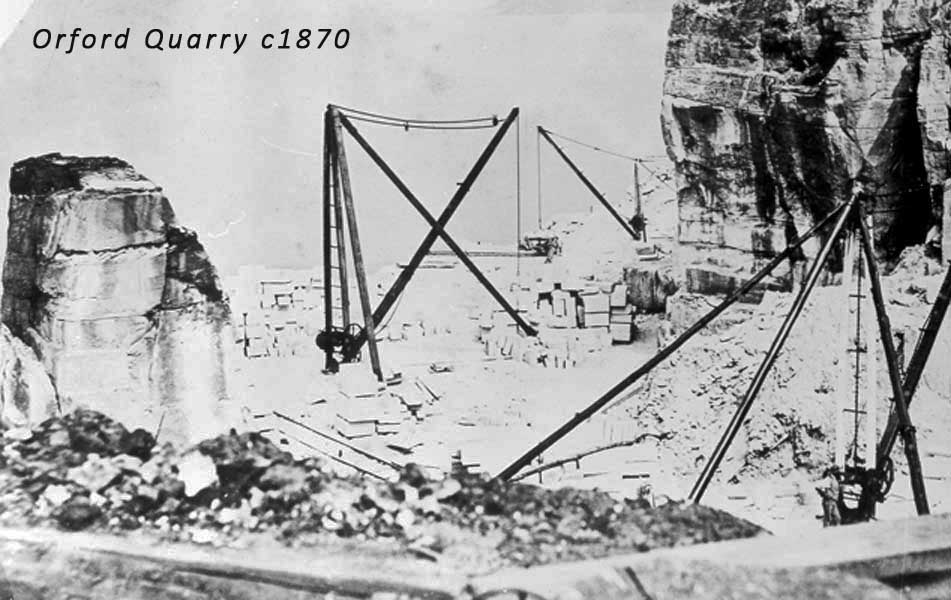
Back to the quarry. Around 1868 Glaister and Co offload the quarry site to James Laurence and William Cain; I’m only theorising here but I assume it was because their Melbourne builds were finished, certainly the Melbourne Post Office was done and dusted. Stephen Crabtree is still at Oakhampton but moves to the Orford Quarry somewhere around 1870, he was reported in the press as being at the Orford Quarry in 1872 and they were still shipping stone to Melbourne. In 1874 there was a report of a huge storm along the east coast and considerable damage was done to the infrastructure at the Orford Quarry, Stephen Crabtree reported that around three hundred pounds worth of equipment was gone.
By this time, he is widely regarded as an expert in all things quarry and stone masonry related, with good reason, keep in mind he started in the quarry business at the age of 13 (so around 35 years’ worth of practical experience).
On the 28th of December 1875 there was a terrible accident, the term ‘accident’ is really not accurate but I’m not sure what else to call what happened. There had been heavy easterly weather for several days, the Prosser River at Orford was in flood and big seas were coming in. So, an 81-year-old decided that was the perfect time to go out in a boat to tow a dead shark off the beach (seriously). Anyway, his boat capsized so a whole bunch of well-meaning men got together and set out to rescue him by going out of the river over the same shallow bar that the old bugger went across. Guess what happened, yep, they capsized. In those days no one could swim and there were now a whole heap of them in the water and this is where that practical brain of our Stephen Crabtree comes into play. Once he gets word of the ‘accident’ he sets out from the quarry site and rows across the bay (keeping outside the breaking waves) and manages to save one of the guys, unfortunately some drowned and their bodies washed up on the beach the next day.
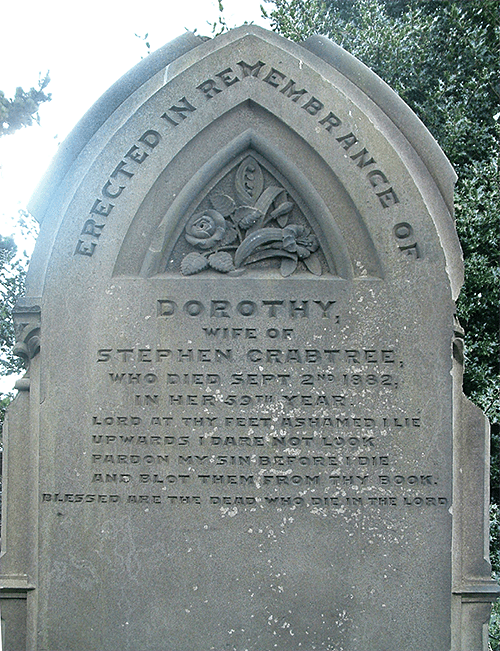
Work at the Orford Quarry continued through the 1870s and into the 1880s, there were some temporary halts to work for various reasons and one of those was because Stephen Crabtree was asked to go and check out quarry sites in Victoria. Sometime in the late 1870s his wife, Dorothy, returned to England and died soon after as a result of alcoholism and congestion of the lungs – a sad end to a difficult life.
He returned to England following his wife’s death to arrange for a suitable headstone to be placed at her burial site but was soon back in Tasmania at the Orford Quarry. In 1884 he married the local school teacher, Florence Wickins. In the years to follow their union produced a total of eight kids: George, Alice, James, Florence, Ellen, Eva, Stephen and Eleanor.
By the time the late 1880s rolled around things at the quarry were winding down. Melbourne buildings could now source sandstone from the Grampians and the demand in Hobart was getting less and less. Even so, he was still busy with opening a quarry on Maria Island, selling what stone he could into Hobart and becoming actively involved in the local community. The only real tragedy during this time was the death of little Ellen (Nellie) at the age of 4 on the 19th of September 1895.
This whole period of his life must have been very satisfying for him. He had a gaggle of kids, plenty of work and a wife who was, by all accounts, a wonderful mother and talented musician and teacher. Sometime in the early 1900s he moved to work at the Brighton Quarry just north of Hobart, 65 years old and still putting in the work.
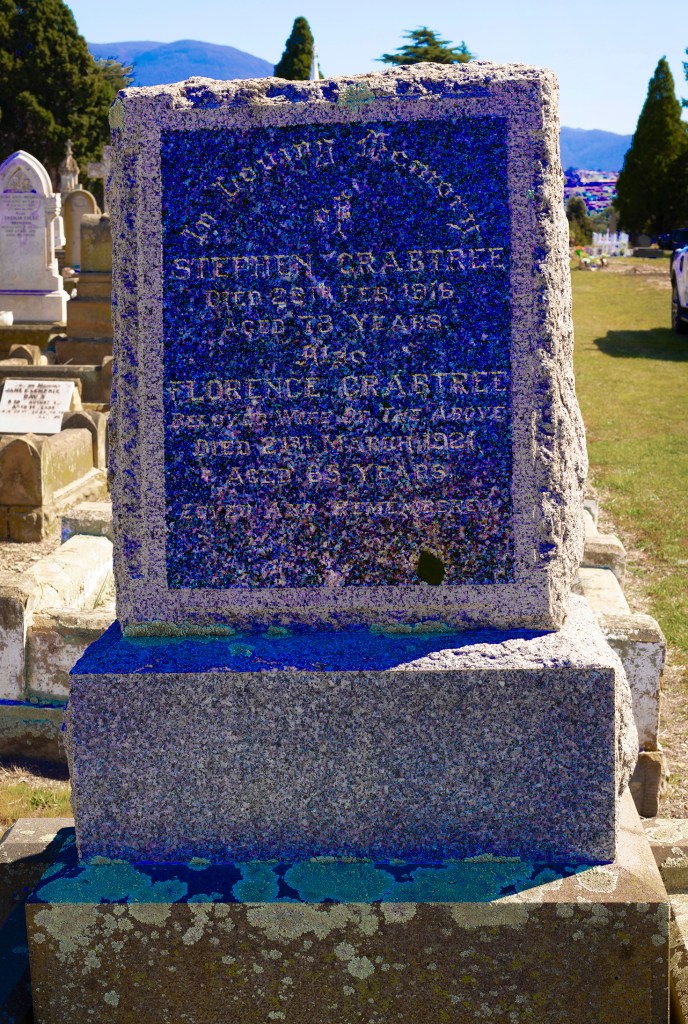
Eventually his dicky heart started causing problems and he died in February of 1916 at the age of 78 from “mitral disease and cerebral embolism”. Of his family, all his kids except Eva (and poor Nellie) married and had kids of their own. George, Stephen and James all served in the military during World War 1 in various roles and all survived to return home. His wife, Florence, lived in Sandy Bay until her death in 1921, she named the residence she was living in “Orfordville” – very cool.
It’s hard to know exactly what sort of a man he was, it was a long time ago. What we do know is that Stephen Crabtree was a highly skilled stone mason and his knowledge of quarrying would have been second to none. He clearly had a large supply of practical commonsense and an admirable work ethic. I can find no evidence he held any land in the area but still, Florence and Stephen managed to successfully raise a bunch of kids, contribute and donate to the local society and between the two of them, they made a significant impact on the Orford and Triabunna region.
From a 13 year old quarry boy to taking charge of the Oakhampton and Orford Quarries, such was the esteem he was held in that the Orford Quarry became known as Crabtree’s Quarry.
Next time you visit Orford be sure to head round to Crabtree’s Quarry and take a moment to stand among the Oyster Bay Pines growing there now and marvel at the scale of the operation. How all that stone was quarried by hand, loaded onto ships by hand and used to build some of the most impressive buildings in Melbourne and Hobart.
There is a walking track from Shelly Beach to Spring Beach with a clear sign indicating the path to the quarry. There is also a short track from Manning Drive in East Shelly but be aware there is very limited parking. Thanks go out to the Tasmanian Archives (they are brilliant) and to the people behind the Crabtree Family Tree on Ancestry – helped verify the info I had and filled in quite a few blanks.
Below is a gallery of images I recently took at Crabtree’s Quarry while exploring with my grandsons. Click the thumbnail images (below) to see them in higher resolution and more detailed information can be viewed by clicking the information icon –  – at the bottom right of the enlarged image screen.