
It all started when I came across a photo in the Tasmanian Archives of a grave. I was looking for information about the old, abandoned quarry in Spring Bay but found this photo instead. The title of the photo read “Photograph – 69/419 – Rheban – Walled grave of the Ratcliffe baby girl at Emerald Bay Point”. The photo (right) appears to have been taken around 1969.
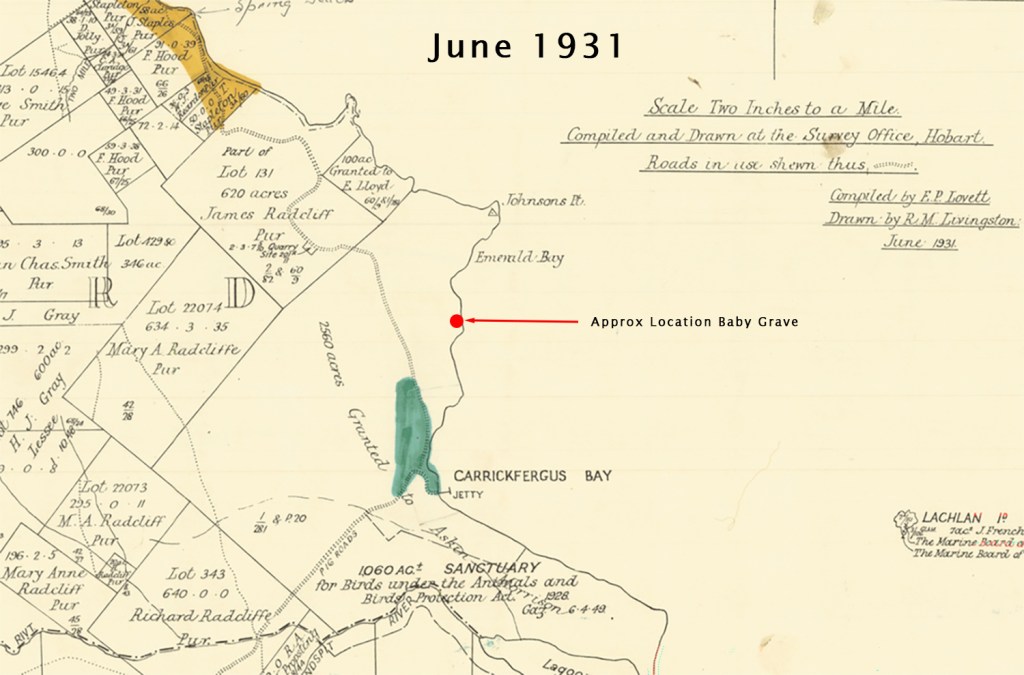
A couple of questions sprang to mind immediately, who is the baby girl and where is Emerald Bay Point. Clearly the location of the grave is near, or on, the Rheban property but the farm covers a huge area. The photo seems to show water in the background so that narrowed it down and there is an Emerald Bay to the north of Carrickfergus Bay (Rheban Beach) so it must be somewhere near there.
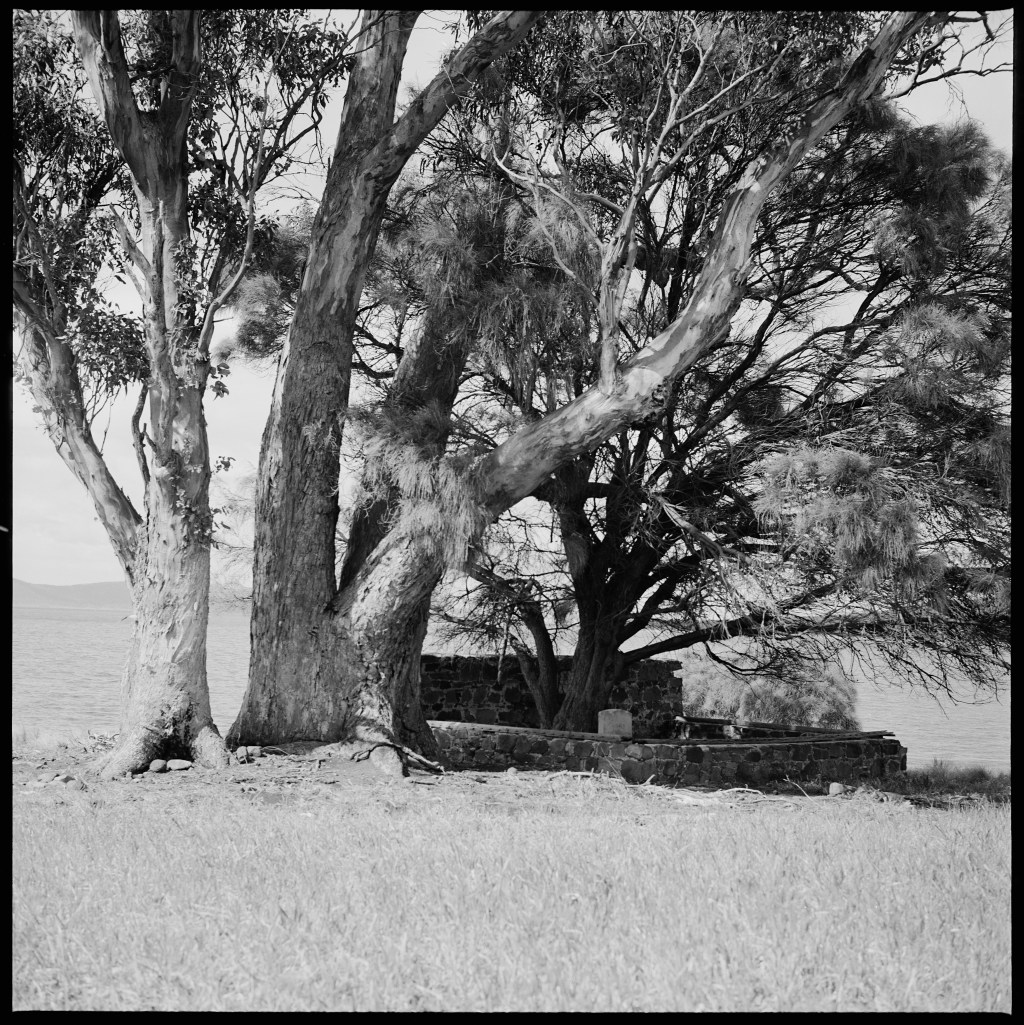
Satellite images of the area proved no help, which was no surprise as the grave would be relatively small and it appeared to be situated under a tree. Then I found a reference to a Graveyard Point on the Prosser Tasmap, which was interesting as no other maps mentioned it.
I have a love / hate relationship with mysteries; I hate not knowing and I love trying to find answers.
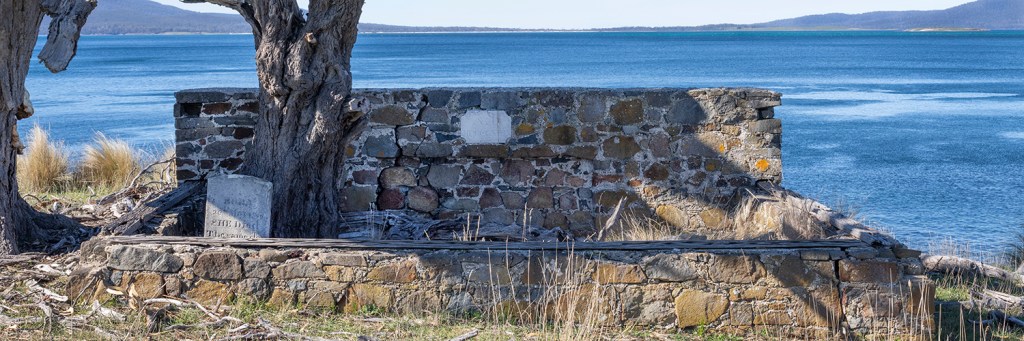
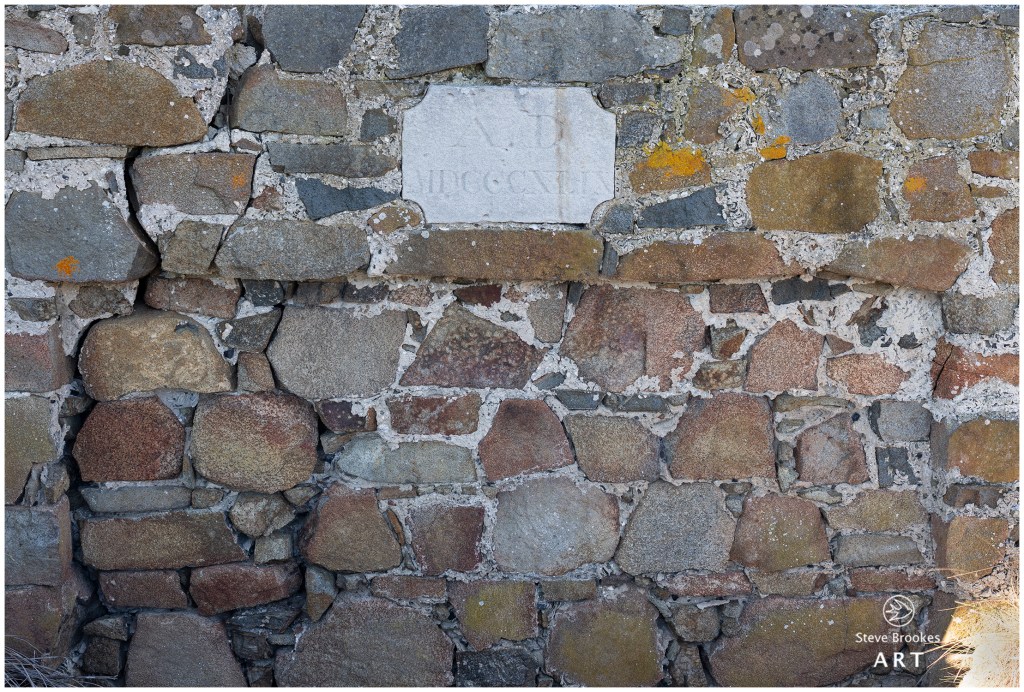
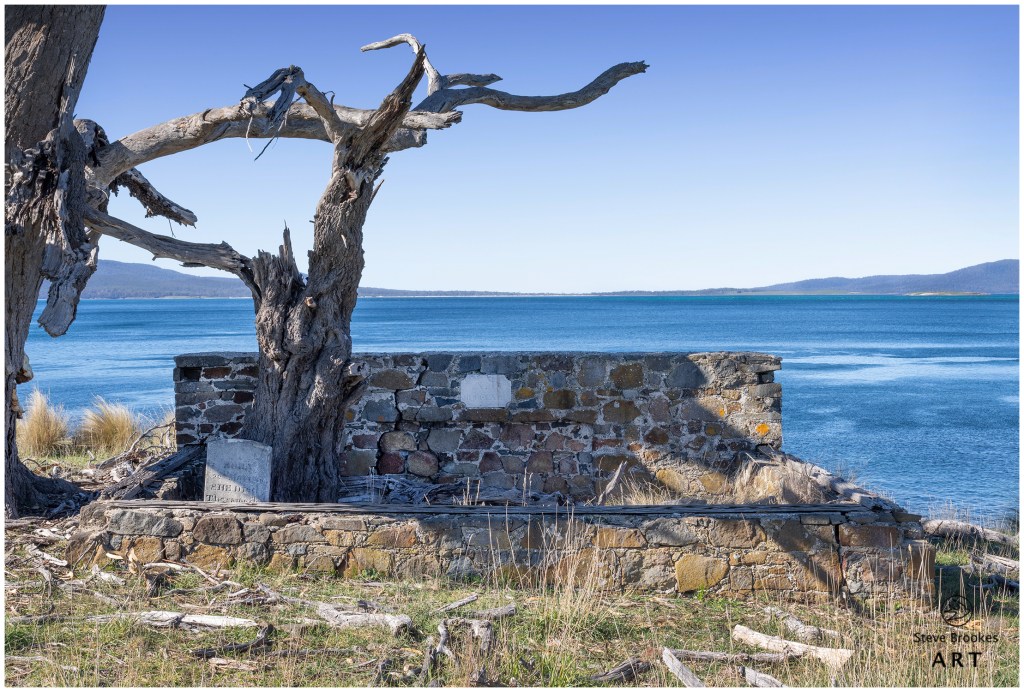
First step in the investigation was to find the grave as there may be more information on the headstone that could confirm if our girl was named “Ratcliffe”. I set off from Rheban Beach and followed the coast and, sure enough, I found the grave on Graveyard Point. The joy of finding the grave was short-lived as the only information on the headstone was “BORN 22nd May 1846 SHE Died The same day”. There is another plaque on the rear wall that reads “AD MDCCCXLIX”, this translates to “1849”, a full three years after the date of death. So it appears the wall around the grave was added a few years after the burial (check out the photos in the gallery below).
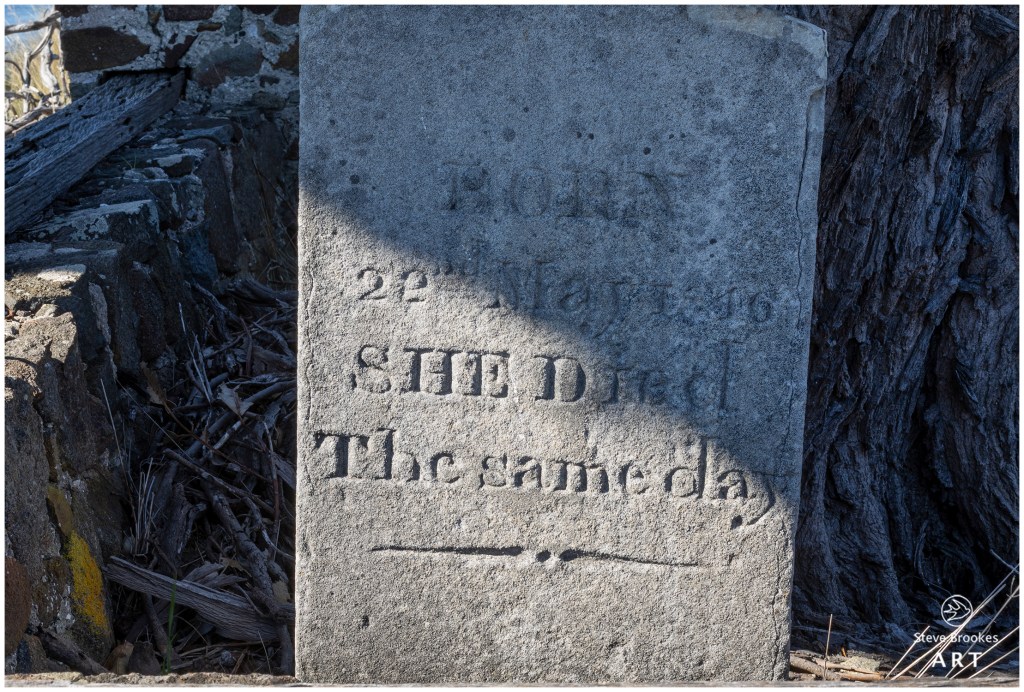
Second stage was to find out who the baby girl was, so I started looking at who owned that land in the 1840s. The 1840s in Tasmania was right in the middle of the convict era, the bulk of the inhabitants in that region of the east coast would be convicts or recently pardoned convicts. The nature of the grave made me doubt it was the work of recently pardoned convicts for the simple reason that it would require a reasonable amount of money to afford the sandstone headstone and plaque. Therefore, it stands to reason the grave was built by a free settler who was not short of a quid or who owned land in that area.
Finding the owner of the land wasn’t difficult as there are plenty of land maps for that part of the east coast, the problem was trying to figure out who James Radcliff was. There was James Radcliff, James Ratcliff, James Ratcliffe and James Radcliffe depending on which map or title document you looked at. Then there was the number of James Radcliff’s in Tasmania at the time, so I started looking at all those born between 1800 and 1820 – this is where my Ancestry subscription came in handy.
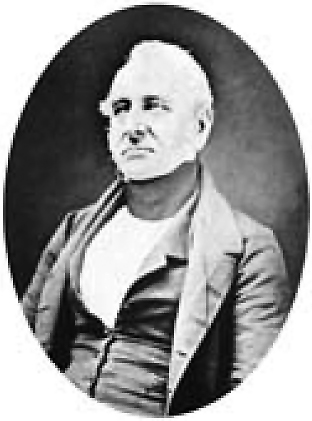
I ended up with four possible matches but no idea which one of the four it could be. I put some photos of the grave out on social media and I struck lucky, one fellow mentioned it was the baby of James and Anna Maria Radcliff – I had a name for the wife and this is when things started to fall into place.
Here is the story of James Radcliff and Anna Maria Butler (the condensed version):
James was born in Ireland in 1800, Anna Maria was also born in Ireland but quite a bit later, in 1819. They were married in Ireland in 1843 although James had already moved to Tasmania around 1830 – as a free settler. Once they were happily married, they trotted off back to Tasmania and settled in the Rheban region where James already had a decent sized land grant. He went on to accumulate quite a bit more property as far north as Lisdillon and became something of an influential character in the south east of Tasmania.
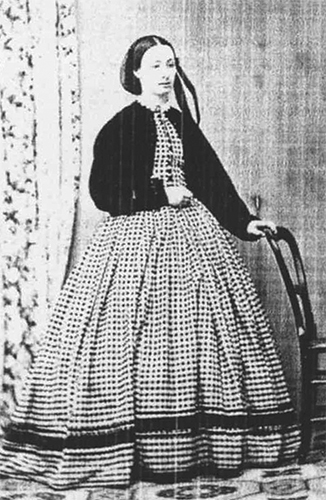
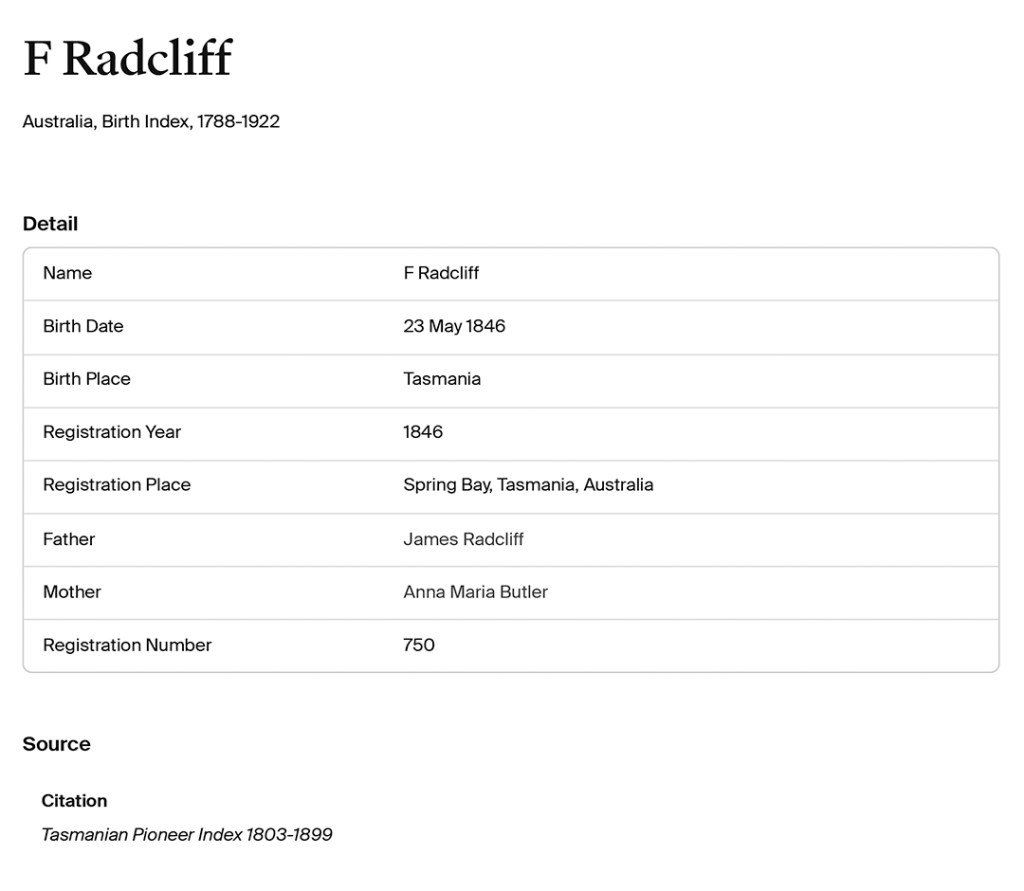
Their first daughter, Susan, was born in 1844, she never married and in 1874 was admitted to the New Norfolk Insane Asylum (she suffered epilepsy) where she died in 1880. Next came our unnamed baby on the 22nd of May 1846, although her birth and death were registered as occurring on the 23rd of May.
There followed a bunch of other kids: Elizabeth in 1848, Hamilton in 1849, Jessie in 1851, Anna in 1853 and, finally, Crawford in 1855. Crawford was to be the last child for a very good reason; James did something foolish – he went back to England in 1856 to cash some debentures and was subsequently murdered. He was unceremoniously chopped up and his body parts dumped in the Thames; except his head, which was never found.
His murderer was never found although it was suspected an ex-convict who he was staying with in London was responsible, this would make sense as the ex-convict and James’ money miraculously disappeared shortly after his body was discovered.
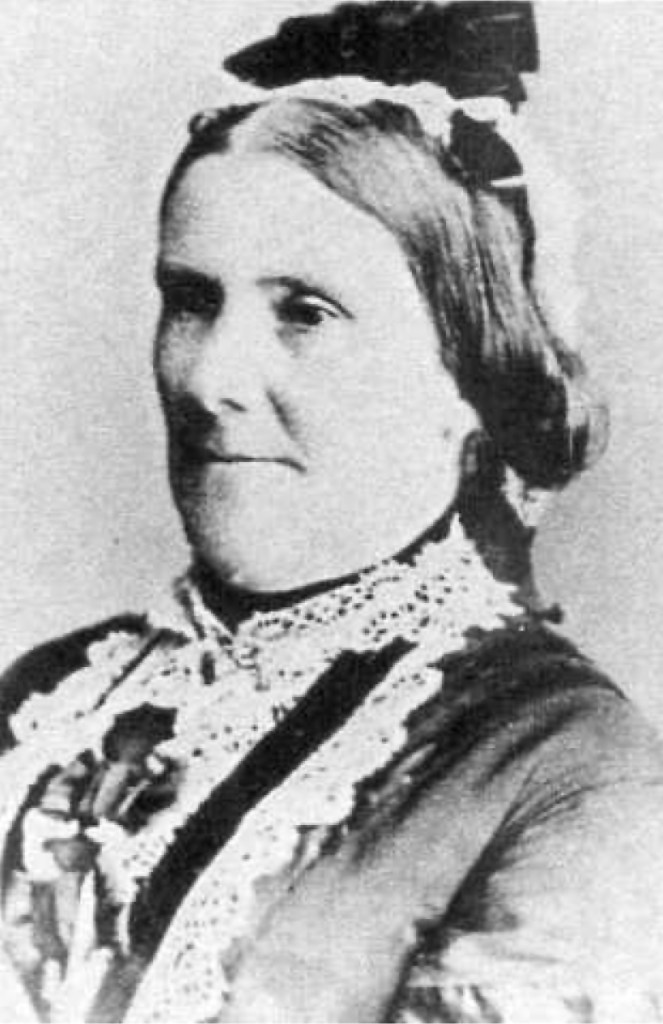
Anna Maria moved back to Hobart at some stage, James had property in New Town (Hobart) in addition to the holdings on the east coast. The loss of a child is an unbearable tragedy and poor Anna Maria suffered the loss of more than one. Our unnamed girl was the first followed by Crawford in 1860 at the tender age of 4, Jessie in 1875 at just 24 and a year later Anna in 1876 at 23 followed by Susan in 1880. Anna Maria died at her home in New Town on the 27th of May 1886.
The start of this story was all about the poor little girl who lost her life before it even had a chance to start and that is a tragedy all on its own. Possibly the bigger tragedy is that of Anna Maria. She marries a fella in her home country, moves to the other side of the world to settle in a place that would have been a total shock to someone coming from a developed environment. Rheban is a stunningly beautiful place but in the 1840s it would have been very isolated; she wouldn’t have had a lot of support close at hand. Then to lose a child, then a husband (in appalling circumstances) and to have the responsibility of raising a bunch of kids, then losing another four or them in the next twenty years, that’s really tough.
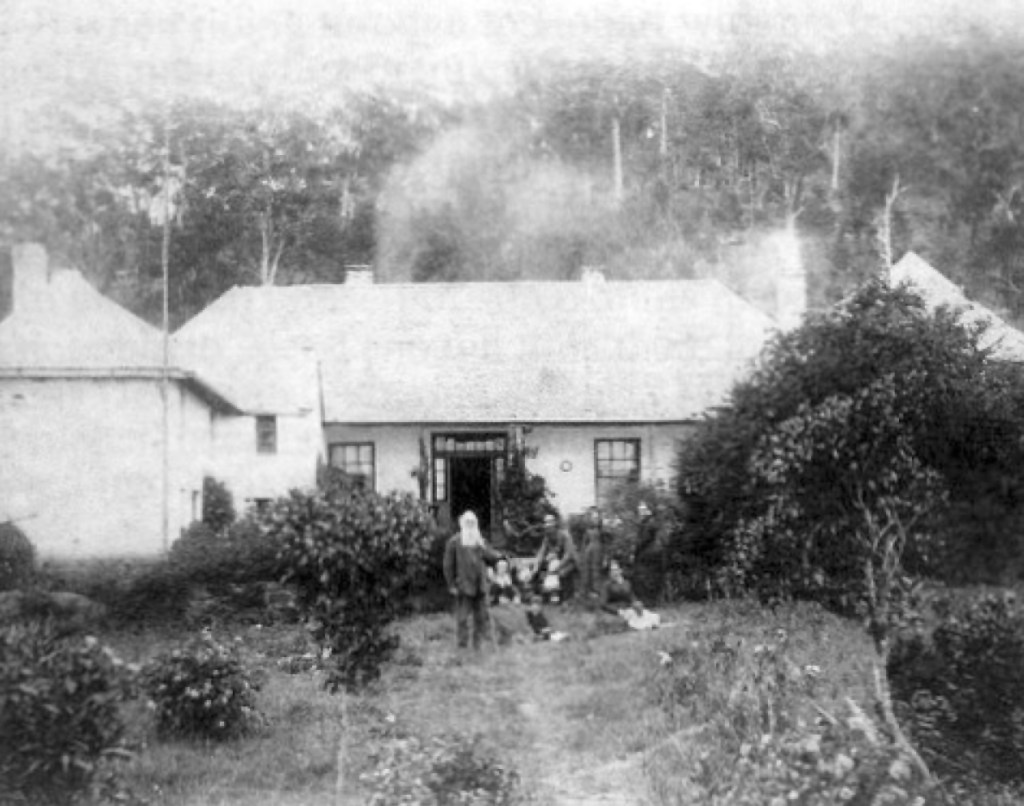
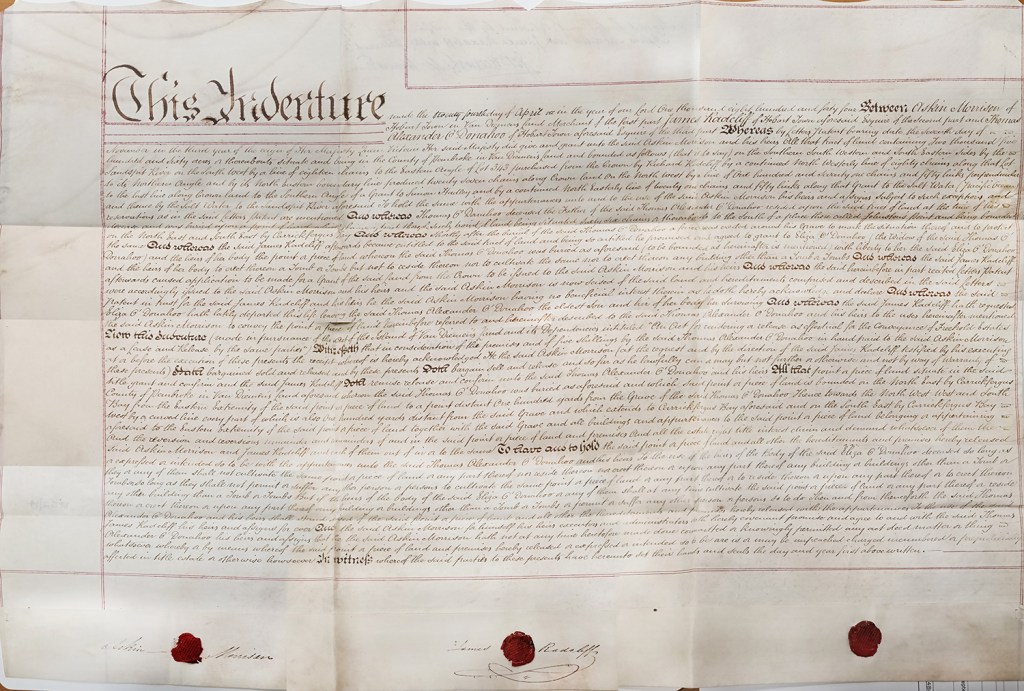
The final query I had at the start of this was the location of the grave for our little girl. It’s a fair distance from the Rheban homestead (around two kilometers), so why there and not closer to the house. The answer to that came when I found a document in the Tasmanian Archives where James and another landowner named Askin Morrison agreed to set aside a parcel of land to be used as a graveyard. Before our baby girl was buried, there was another grave not far from there on Johnson’s Point, this was for a fellow named Thomas O’Donahoo who died in 1831. Finding his grave could be my next endeavor but this does explain why her grave is located so far away from the homestead. It’s possible James had plans for a much larger graveyard as there wasn’t one in the district at that time. The agreement for that parcel of land was signed in April 1844, just one month later his daughter was to be the first and only person to be buried in his new graveyard.
So, the mystery of the grave of the unknown baby gets solved. From an old photo found by accident I have learnt a great deal about the Radcliff family, their trials and tragedies. I hope the story of the little baby girl never gets forgotten and it lasts longer than her memorial site, perched there overlooking the beautiful Spring Bay and Maria Island.
To visit the grave just head north from Rheban Beach and follow the coast. Parts along the walk have no fencing to separate private land from the coast so you need to be mindful that it is private property and last time I was in, there were quite a few cows around. It is a decent hike, around 5 kms return but by following the coastal contour it is relatively flat. The exact coordinates of the grave are: (-42.61728 147.94037), copy those numbers into Google Maps (for example) and it will highlight the spot.
A print friendly version of The Story of Baby Radcliff is available below:

